

Let’s face it: it’s hard to imagine going back to a world without generative artificial intelligence (AI). These all-in-one AI tools can help with everything from producing reports and images to debugging code and even troubleshooting household problems.
And because generative AI is basically everywhere—search engines, social media platforms, writing and image-editing tools, and our smartphones, to name a few—many people fall into the trap of letting AI do all the work for them. Students, in particular, are leading the pack.
According to a study conducted by the Digital Education Council in 2024, 86% of students use AI for academic purposes. Among them, 54% use it on at least a weekly basis, 54% use it daily or weekly, while 24% use AI daily.
If you’re one of these students who rely heavily on AI in your studies, that’s understandable. After all, it can seem like it has an answer for just about everything. But using generative AI effectively means pairing it with critical thinking and good judgment. Here are some tips to help you make AI work with you, not for you, at school.
Check your school’s do’s and don’ts
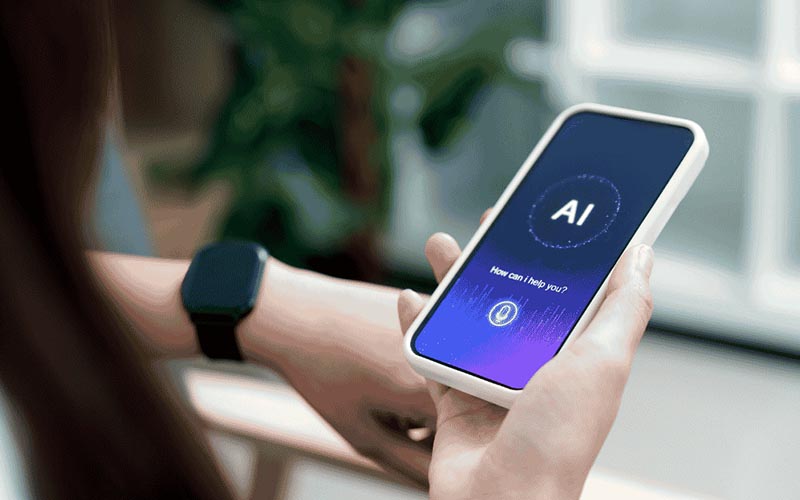
Before logging in to ChatGPT, Claude, Photomath, or Canva Magic Studio for your next homework , make sure you understand your school’s guidelines on using AI. Many schools in the Philippines now allow the use of these AI-powered tools, following the Department of Education’s issuance of the Foundational Guidelines on Artificial Intelligence (AI) in Basic Education or DepEd Order No. 003, s. 2026.
According to the agency’s guidelines, AI shall only function as an “auxiliary tool” in learning, wherein “human judgement and pedagogical discernment remain paramount in all educational processes.” It emphasizes that “AI systems are prohibited from replacing the essential role of teachers and the holistic evaluation of learners.”
While these guidelines have been in place since their release on Feb. 20, 2026, rules on the use of AI may still vary by academic institution. That’s why it’s crucial to understand what constitutes responsible AI use and what doesn’t. Read your school’s policies, ask your teachers for specific guidance, and then let AI assist you within those boundaries.
Keep in mind, too, that many institutions use AI-detection software to enforce these policies. Breaking them can also lead to sanctions or negatively affect your conduct grade—and you wouldn’t want that, would you?
Your work, your words
Plagiarism is the act of using someone else’s work as your own—whether by copying it word for word or by paraphrasing their ideas—without proper citation or attribution.
With AI now doing much of the work for us, avoiding plagiarism has become more challenging. Imagine how easy it is to simply copy content generated by ChatGPT or Gemini. It’s quick and convenient, but that does not make it acceptable.
Plagiarism—whether of a famous philosopher’s work, an AI-generated output, or even the ideas of a fellow student—is considered cheating. If the work is not yours, you must always acknowledge its source. Failure to do so may not only result in failing grades but also suspension or expulsion from school.
Do the work and let AI assist
Think of AI as your assistant, not your replacement. You can use ChatGPT, Gemini, or Copilot to spark ideas, Perplexity AI to help you research, Claude to break down information, and Photomath or Math Solver to guide you through tough math problems. But the key is to do the thinking first—write your essay or solve the problem on your own—then use AI to double-check and improve your work.

When you let AI do all the heavy lifting for you, it increases the risk of plagiarism and, at the same time, deprives you of the valuable lessons you should be learning in school. As Dan Levy, senior lecturer at the Harvard Kennedy School and co-author of Teaching Effectively with ChatGPT, puts it: “No learning occurs unless the brain is actively engaged in making meaning and sense of what you’re trying to learn, and this is not going to occur if you just ask ChatGPT, ‘Give me the answer to the question that the instructor is asking.’”
“At the end of the day, if you think you’re in school to produce outputs, then you might be OK with AI helping you produce those outputs. But if you’re in school because you want to be learning, remember that the output is just a vehicle through which that learning is going to happen.”
Practice proper citation
After completing your own work with a little help from AI, it is important to acknowledge how technology assisted you along the way. Being transparent on how you used it not only proves that you work with honesty and integrity, it also positions you as a savvy scholar who knows how to collaborate with emerging technology responsibly and effectively.
There are several ways to cite AI-assisted content, but many institutions adopt the APA (7th Edition) style as the standard citation format. This includes the following:
- “Author” or the company responsible for developing the AI tool
- Year, month, and day when it was used in parentheses
- Title of the chat in italic sentence case
- Nature of the source in square brackets
- The source, which comprises of the name of the AI tool itself and the URL of the chat
Here are a few example provided by APA Style on its website:
- Google. (2025, May 22). High school grammar concepts overview [Generative AI chat]. Gemini 2.5 Flash. https://g.co/gemini/share/a1306ce12929
- OpenAI. (2025, August 21). High school grammar concepts [Generative AI chat]. ChatGPT. https://chatgpt.com/share/68a77b60-0ee4-800c-9acc-cd3fd573c311
- Perplexity AI. (2025, May 20). High school grammar topics [Generative AI chat]. Perplexity. https://www.perplexity.ai/search/a457cb8c-c663-4c9b-b34e-cb03d8108b35
Check, verify, and refine your work
Unless you’ve somehow missed the conversation, you’re probably aware that AI is not perfect—it can make mistakes and provide incomplete or misleading answers. ChatGPT and Gemini themselves make this clear, as both platforms include disclaimers noting that information sourced from the internet may not always be accurate.

That’s why it’s essential to double-check AI-generated content against official materials and other reliable sources before using it in your assignments. You can also turn to fact-checking tools such as Google’s Fact Check Explorer for verifying quotes, stories, and images found online; Crossref for academic citations; and Snopes for viral claims circulating on the internet.
When it comes to schoolwork and beyond, remember this: AI can support your thinking, but it should never replace it.