

Data is the fuel that powers artificial intelligence, enabling machines to learn and make decisions. However, as AI continues to evolve, accessing data is becoming increasingly difficult. The rise of AI has created a future where our data is predominantly controlled by a handful of tech giants operating within their own closed ecosystems.
Two Filipino-American graduates from Harvard University and Massachusetts Institute of Technology (MIT) are at the forefront of a data revolution. Their vision: create a system where no single entity holds control, ensuring data remains a tool for empowerment.
Art Abal and Anna Kazlauskas have co-founded VANA, a startup that will value each person’s digital footprint with the use of blockchain technology.
Art Abal: The legal mind shaping data ownership
Born in Iligan City to Cebuano parents, Art;s journey has taken him from the bustling corporate world to the heart of rural communities. His experiences—ranging from working in a global law firm to immersing himself in the Colombian coffee industry—have shaped his unique perspective on the intersection of technology, society, and human impact.
Now, as the COO of VANA, he is on a mission to reshape how technology and society influence each other in this age of AI.
With a background in corporate law and a deep understanding of AI’s societal implications, Art is dedicated to ensuring that data is used ethically and responsibly.

Anna Kazlauskas: A visionary in AI and decentralization
Armed with a strong foundation in Computer Science and Economics from MIT, Anna—whose mother is from Pampanga—has been raising the profile of Tarlac Province while simultaneously pushing the boundaries of blockchain and AI.
From a young age, Anna has seen the world through the lens of data. At one point, she even created a program that transformed US inflation data into a song.
Her diverse experiences include working at Celo on blockchain projects for financial inclusion, interning at the World Bank where she automated tasks that others did manually, and founding her first company, Iambiq, through YCombinator.
Additionally, Anna’s experience in Ethereum crypto mining and her work with central banks and international organizations from 2014 to 2017 were dedicated to connecting technology with financial policy.
This complements Art’s insights into governance and data rights. Together, they leverage their diverse experiences to bring more people and data into a truly inclusive space, which led to the creation of VANA.
Where it all started
Anna and Art’s journey started in an MIT Media Lab class, where they aimed to create tech for emerging markets. Driven by a desire to help underserved communities, they launched TOCA, a project aimed at allowing people in low-income areas to label data using their phones.
TOCA’s success in Cebu and Manila showed the Philippines’ potential to bridge the AI divide. However, they had to pause the project to focus on their studies. This, in turn, allowed them to refine their vision.
After completing their studies, they launched VANA, a platform focused on giving users control over their data, allowing them to use it across different apps.
Derived from “Nirvana,” VANA aims to create a decentralized space for AI, free from Big Tech’s influence. The business of decentralizing data attracted the attention of some of the leading crypto VCs, with Paradigm and Polychain backing the pair right off the bat.
Breaking the data wall to uplift Filipinos
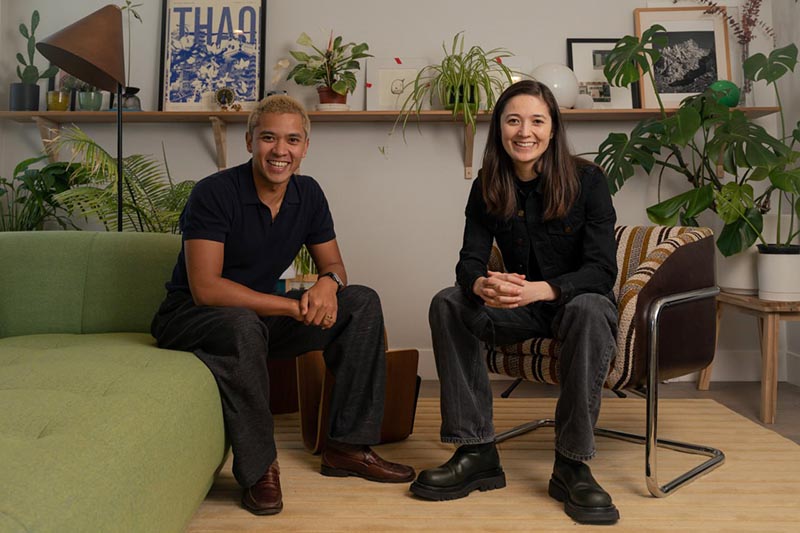
Rooted in the Filipino heritage of its founders, VANA is committed to empowering Filipinos by giving them complete control over their data and enabling them to benefit directly from it. As AI development is hindered by the scarcity of fresh, high-quality data, VANA offers a unique solution. The platform’s ethical data sourcing, which is based on user consent, promotes fairness and aligns with Filipino values of community and integrity.
Using blockchain, VANA gives individuals control over their data while improving AI and protecting privacy. The platform has seen global success, with initiatives like the Reddit Data DAO drawing over 140,000 participants in a week, showing how people are fed up with platforms exploiting their data without permission.
In the Philippines, VANA’s technology allows AI to better understand local cultures and languages, creating more inclusive technologies that genuinely represent the community.
As the next chapter of AI unfolds, VANA is set to lead the charge, ensuring that individuals, rather than corporations, control their digital identities.
For Art and Anna, their drive is not just about building a tech company but about empowering Filipinos in a rapidly changing world, “This is one direct way in which Filipinos can really participate in this emerging data economy,” Art said with conviction.
This is not merely a business for them, it’s a movement with the potential to leave an enduring legacy for generations.