

Just a few years ago, most Filipino consumers had never seen, touched, or experienced a VinFast vehicle in their daily lives. The brand existed largely as a name attached to international auto show headlines and ambitious global plans. Then, almost quietly, everything changed.
Today, VinFast is a familiar sight across Metro Manila. Green GSM electric taxis move through rush-hour traffic, VF 3s navigate dense residential areas, and V-Green charging stations appear beside neighborhood malls. The brand has moved beyond novelty to become part of everyday mobility, emerging as a Southeast Asian face of the Philippines’ growing EV transition.
Many Filipinos now say, “My first step into electrification was with a VinFast, coming from our neighbor, Vietnam.”
For Simon Austria of the VinFast BGC dealership, this shift marks a defining moment. “When people stop seeing VinFast as something new and start treating it as a familiar, everyday choice, that’s when a brand truly enters the market,” he said.
A true disruptor
For years, electric vehicles in the Philippines lived on the fringes—visible at exhibitions and policy discussions, but rarely on public roads. Gasoline cars, backed by decades of habit and infrastructure, continued to dominate.
VinFast chose not to wait for readiness. It chose to create it.
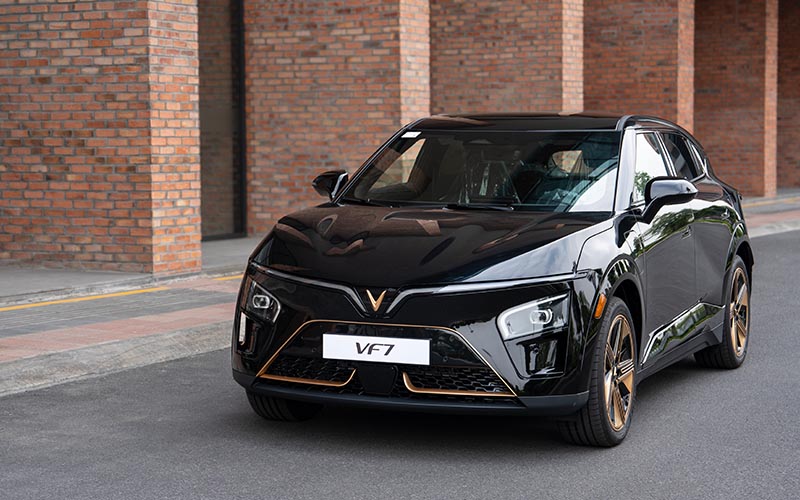
Since launching locally in May 2024, VinFast has rolled out a full EV lineup, from the VF 3 and VF 5 to the VF 6, VF 7, and VF 9. “At first, customers came to the showroom out of curiosity,” Simon recalled. “Later, they came back because they were already seeing VinFast cars on the road every day.”
As visibility grew, so did confidence. Conversations shifted from “What is an EV?” to “Where do I charge?” and “How much will I save?” The VF 3 quickly became a crowd favorite. “The VF 3 is the most frequently asked-about model at our showroom,” Simon noted. “It’s perfectly suited to Philippine traffic, compact, agile, easy to drive, and ideal for couples or young urban drivers.”
When users become storytellers
VinFast’s story is increasingly told by its users. Car modifier and content creator Carl Macaisa sees the VF 3 as more than transport. “The VF 3 is like a blank canvas. You can express your personality through the car,” he said.
That sense of openness resonates deeply with Philippine car culture. Carl later upgraded to the VF 6, which he describes as striking a rare balance: enough performance for enthusiasts, enough comfort for families, and no disruption to daily routines.
An ecosystem that builds trust
While the vehicle is the most visible product, VinFast’s true differentiator is its ecosystem. Backed by Vingroup, the brand has simultaneously invested in V-Green charging stations, Green GSM electric ride-hailing, and long-term aftersales programs. The result is a closed-loop model that integrates vehicles, infrastructure, and services into a single, cohesive EV ownership experience.
Programs like long warranties, free charging incentives, and the Resale Value Guarantee have addressed one of the market’s biggest anxieties. “This is a very rare policy in the market,” Simon Austria noted. “VinFast customers know they always have a safety net.”
Looking ahead
For Simon, VinFast represents Asian ambition realized. “As a Filipino, I’m genuinely proud to see an Asian brand like VinFast competing head-on with American and European automakers,” he said.
With momentum building and infrastructure expanding, 2026 is widely seen as a turning point. In the Philippines, VinFast’s journey—from unfamiliar name to everyday presence—is no longer a promise. It is already happening.