
There’s an early scene in Forgotten Island—Dreamworks Animation’s love letter to Filipino culture—that had me chuckling and winning me over despite my initial suspicion that it might be another attempt to mine Pinoys’ appetite for international validation.
Pardon my cynicism, but we’ve seen it happen in recent years and it’s still ongoing with various levels of success. Foreign vlogger comes over to the Philippines, tries out staples like adobo and balut, then proclaims it to his audience.
Content goes viral, Pinoys keep on sharing such content because (“Wow! White guy loves us!”), and so our culture gets monetized for somebody else’s benefit. Granted, some of the attention might actually be sincere, but personally, I take a dim view of it. Shallow observations made out to be the greatest thing since turon just feels so cheap and exploitative.
Fortunately, some personalities’ stars have dimmed as the public has wised up.
Nas who?
But I digress.
Jo—one half of the protagonists of the story—is late to her best friend Raissa’s going away party. She’s coming from her temp job, so she shows up at her friend’s house still in her giant chicken costume. It’s overflowing with guests, and she asks a grumpy old lady:
“Tita, where’s Raissa?”
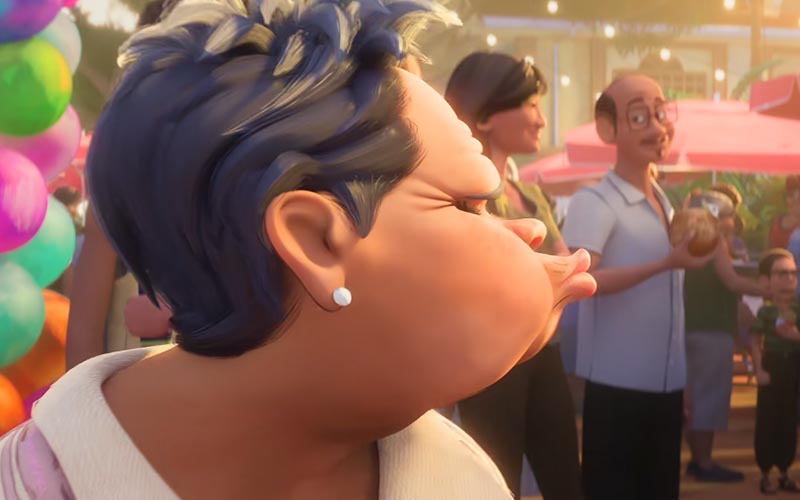
The lady points in a general direction with her lips. It’s a blink-and-you’ll-miss-it moment, but if you know, you know. While this gesture isn’t strictly made just by Filipinos (I’ve seen it done by a Native American Indian character in Yellowstone, too), other Easter eggs abound in the three-minute scene.
The karaoke-singing dad of Raissa with the ever-present belt bag. The much revered lechon, which will always be present at a big Filipino bash along with its balde of lechon sauce. And, of course, a monumentally cheesy and heartfelt audio-visual presentation of the co-protagonist’s childhood, mercifully cut short by Jo when she accidentally sets fire to the said lechon.
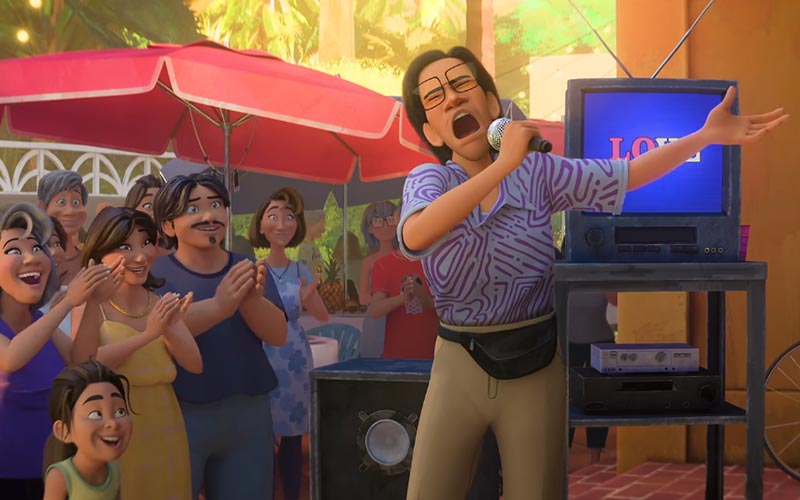
It’s all so smoothly and hilariously well done that, rather than feeling like our culture is being turned into just another opportunity for laughs, it feels more like a love letter to the little details that make us who we are.
In fact, the entire movie is a tribute to the life of a typical Filipino, a coming-of-age fantasy movie for anyone who grew up raised by doting parents and grandparents, told stories of scary woodland creatures and monsters like the manananggal and kapre that may or may not have roots in unexplained phenomena but may have also been just a way to get us in bed by 8 in the evening.
At least, that’s how I remember my own lola as she told me these stories and how she was convinced a duwende was the culprit behind the perfect craters in the sand lot behind the house.
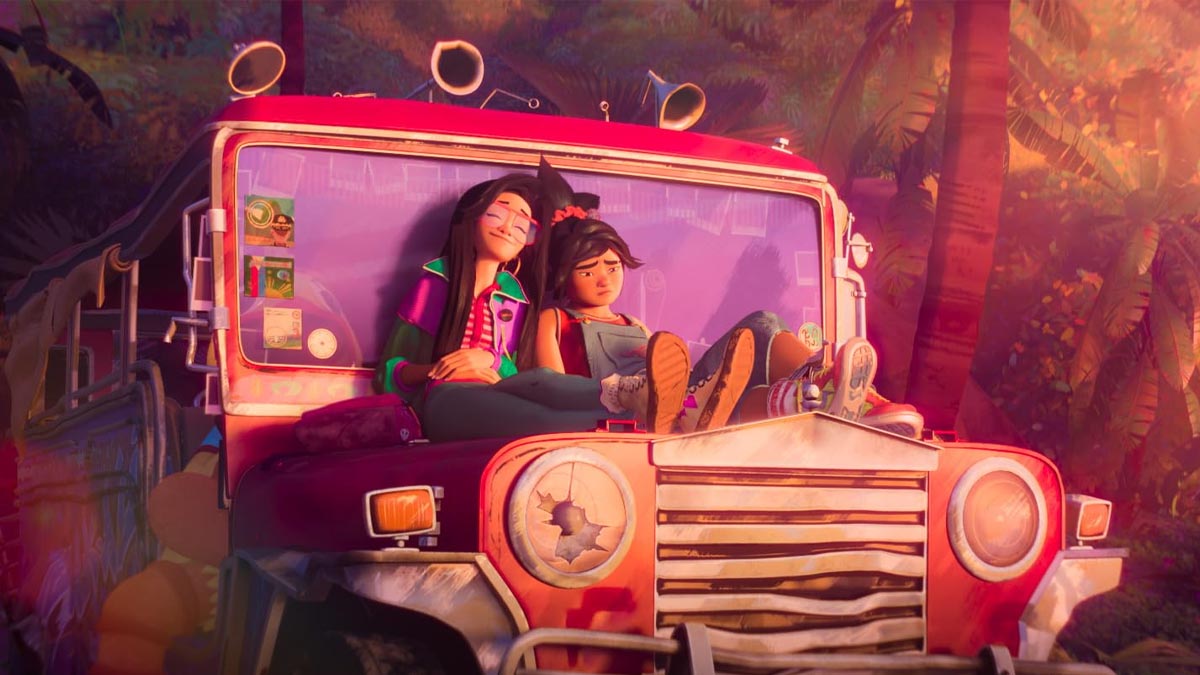
By now, you should probably already know the gist of Forgotten Island. Jo and Raissa are childhood best friends in a small, unnamed rural town in the Philippines.
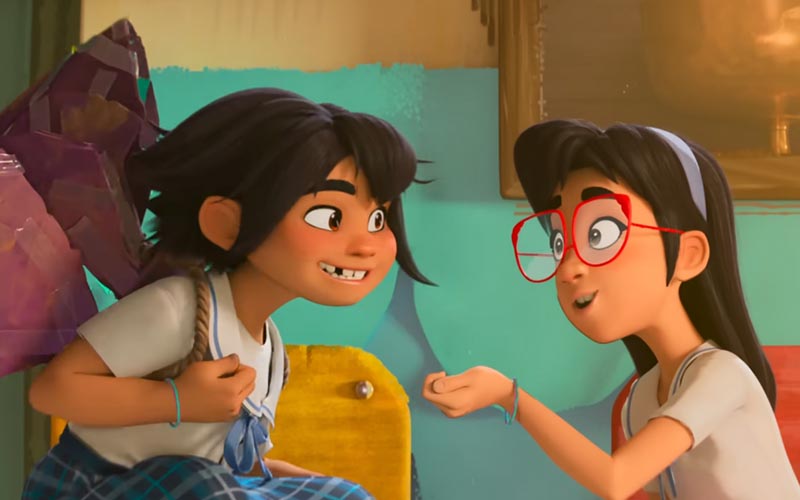
Jo is the tomboy-ish, fun-loving girl with a heart of gold, a high EQ, and a knack for getting into trouble. Raissa is the more book-ish of the two, reserved, smart, and with a scholarship to Cal-Tech University in the US who is therefore destined to fulfill every Filipino’s dream of a better life abroad.
Jo lives for the moment, and in one simple scene that tells so much, Jo’s lola tells her that her father isn’t taking her with him to America. Instead, Lola promises that she’ll take care of Jo. And you can guess where this is going, because as the two grow up to become the best of friends—cemented by a scene outside the Principal’s office after Jo punched a bully and Raissa backed her up—Lola eventually falls ill and passes on, although that’s a scene that’s never shown. Instead, the timeline shift is handled with a beautiful montage of “growing up” years and hi-jinks, ending with a hospital scene with Jo by her lola on the bed, Raissa at their side.
Tell me you’ve never had this moment in your life, because I went through something similar when my grandmother died. It’s a scene that brought back memories of my childhood growing up with a lola I didn’t always see eye to eye with, and with whom I wish I could have set things right.
Forgotten Island is about a fantastical trip to “Nakali” (short for ‘nakalimutan’), an island populated by monsters and creatures from Filipino folklore. After finding a magical sand dollar on the beach the night before Raissa is to fly to America, they wake up on a different beach with no recollection of what happened the night before.
But there are clues.
Half of Raissa’s hair is gone, Jo is missing a shoe, they have weird tattoos, and there’s a slightly unhinged were-dog named “Raww,” an obvious tribute to the aspin. The rest of the movie follows their journey to figure out exactly what happened the night before and how they can get back to the real world.
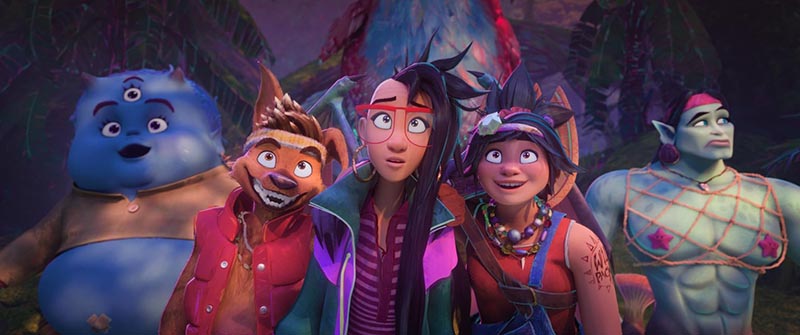
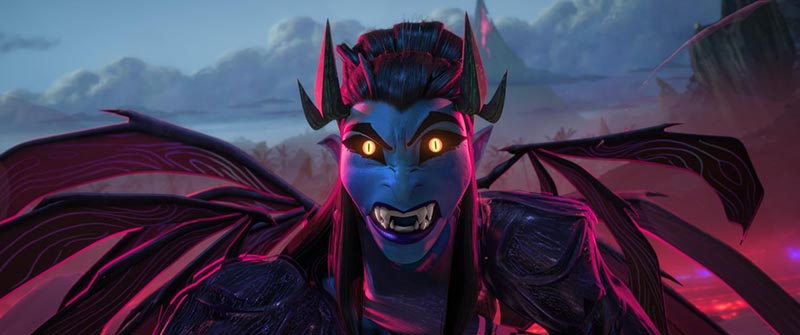
Along the way they meet some truly interesting characters like “Bungi” (a re-imagined tiyanak), an army of duwende (gnome-like creatures who are indescribably cute), a village of kapre (tree-like creatures sorta like the Ents in Lord of the Rings), the dreaded Manang (“Mananggal”), and Batiba, the memory-stealing demon.
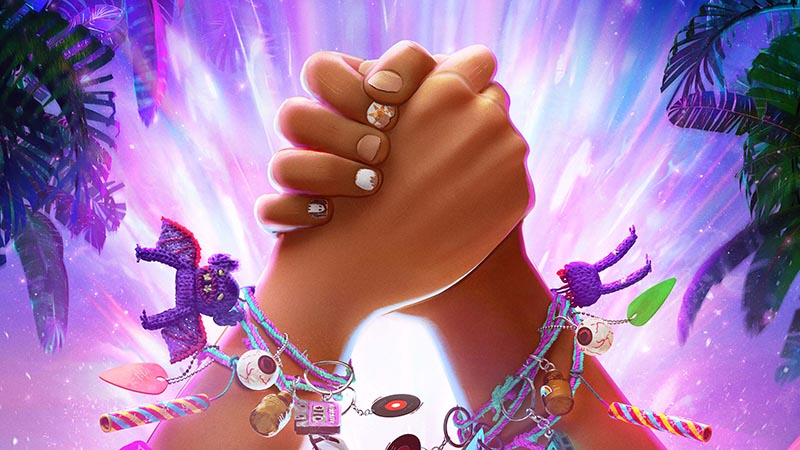
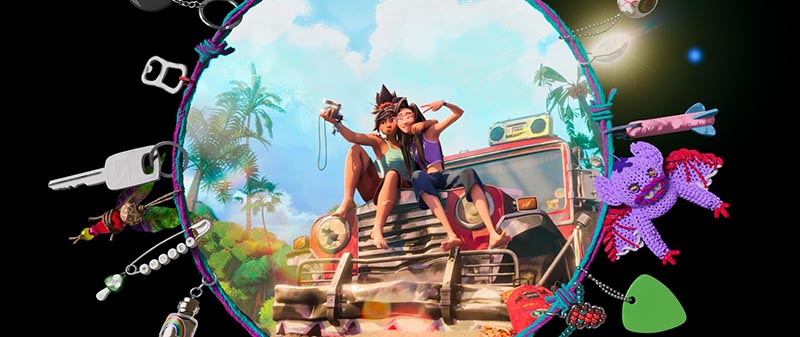
As its title and the main antagonist suggest, the story is about the importance of memories and how they make us who we are. Jo and Raissa keep a matching pair of friendship bracelets with all sorts of trinkets attached to them, symbolizing the adventures and experiences associated with each.
SPOILER ALERT: Stop reading here—the next part gets into crucial plot details.
Many other things happen, but at a critical point in the movie, Raissa needs to be rescued from Manang, so Jo trades her friendship bracelet so that Battiba can retrieve Raissa. It’s the ultimate test of friendship between the two, and though it’s somewhat of a tired trope in pop culture movies, the way the scene is earned makes it all the more poignant without being trite nor heavy-handed.
Visually, the movie is a slam dunk for the most part. Filipinos have long made a name for themselves in the overseas animation industry, and Forgotten Island’s lead animators came from Snipple Animation Studios based in Quezon City. Directors Joel Crawford and Januel Mercado keep the story on a (mostly) tight leash, although like a typical buffet table at a Filipino party, it could have done with a bit less sugar in the iced tea.
The animation style is a mix of anime and Studio Ghibli, with differing styles to denote flashbacks. At times the dialogue is so quick and jokes come flying machine gun-style that it brings to mind memories of The Powerpuff Girls and Johnny Bravo, especially when Prince Mermahn is introduced. Whoever thought of putting talking starfish nipples on the guy must have been high as a kite.
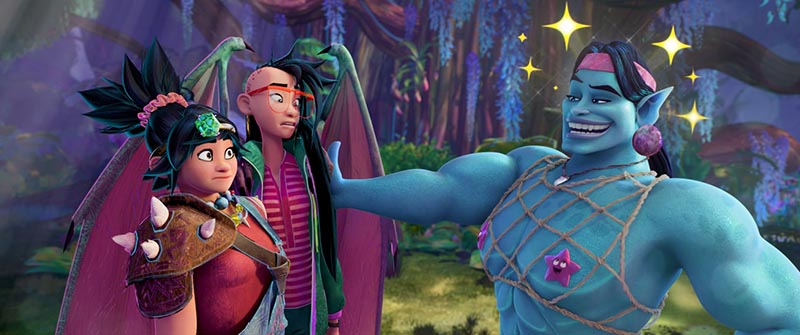
It can also induce a mild headache with the loud color palette exploding on screen every few minutes… best to take a seat further back in the theater.
Voice acted by H.E.R. (Jo), Liza Soberano (Raissa), Dolly de Leon (Lola), Lea Salonga (Manang), and Jenny Slate (Batiba), it’s a perfect casting as I found every character to be unique and well-defined, with each actor and actress disappearing in his or her role.
In fact, with very little advance information about the movie, I only found out belatedly that Liza Soberano was, in fact, playing Raissa. H.E.R. brings the tireless and childlike energy to the character of Jo that will remind you of the most hyper classmate you ever had back in your high school years. Lea Salonga doesn’t have much to work with since she only has a few lines, (notably, “Balik”), but it works and Manang’s nightmarish figure is like a cross between a vampire and Maleficent.
As for the soundtrack, “Mga Kababayan” is a sure hit especially among Gen Xers, while Sophia Laforteza’s “Never Tear Us Apart” captures the soul of the movie. That said, I do think the soundtrack resonates more with the older generation than with kids.
A key phrase in the movie, “Tayo na,” has been getting some heat, with many arguing that the more appropriate phrase—especially in an urgent situation—should be the more colloquial expression, “Tara na.” As we know, depending on context and emphasis, “Tayo na” can mean three things: “it is us,” “let’s go,” or “get up.”
Whether the former was deliberately chosen by the writers to hold a a double—or even triple—meaning in the context of friendship and action is up for debate, but it’s just a minor issue for me. As we all know, language is an ever-evolving creature. The more one uses a phrase—even one that was recently invented—the higher the likelihood it becomes accepted by the general public.
Forgotten Island is a Filipino treasure that must be shared. It’s a landmark in filmmaking, and while the numbers may not point to a box-office success, I have a feeling it will become a long-term streaming hit. But while it’s still playing in theaters, I strongly suggest you go. It will leave you nothing but a happy memory.
Review by Andy Leuterio
—