
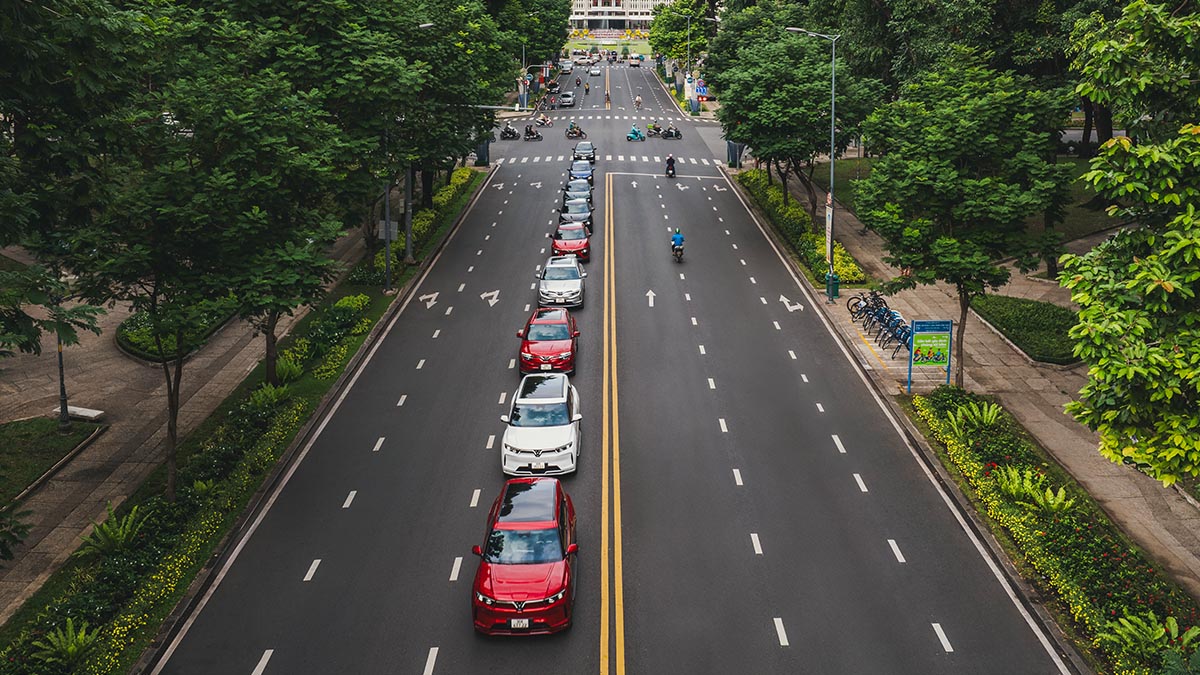
December brings a familiar kind of chaos to Metro Manila’s roads. EDSA glows red for hours, C5 locks up in both directions, and even side streets lose their promise as shortcuts. With holiday errands, reunions, late mall hours, and road closures all happening at once, congestion feels unavoidable.
We laugh about “carmageddon” to keep sane, but sitting in gridlock makes the losses clearer than ever: time, fuel, and patience, all slipping away.
Worse, the environmental cost often goes unseen, as holiday gridlock quietly pushes emissions higher.
This new year, let’s take the time to rethink how we move—and reflect on the growing role electric vehicles play to help drive a cleaner future.
When traffic peaks, pollution follows
The holiday surge on Metro Manila’s roads intensifies an already serious environmental problem. Transport accounts for an estimated 80 to 90 percent of the capital’s air pollution, and vehicle volume during peak December days can reach hundreds of thousands on major corridors.
Long hours of idling and stop-and-go driving force engines to burn fuel inefficiently, releasing higher levels of carbon dioxide, carbon monoxide, and fine particulate matter. It’s no coincidence that the holidays often rank among the most pollution-heavy periods of the year.

A preview of the future we don’t want
The emissions surge seen each December reflects a broader, long-term trend. A study on Metro Manila’s transport sector projects that under a business-as-usual scenario, CO₂ emissions could reach 16.93 million tonnes by 2050, alongside sharp rises in nitrogen oxides, hydrocarbons, and PM2.5—pollutants linked to serious health risks. Annual economic losses from pollution are estimated at $237 million. Holiday traffic becomes a preview of a fossil-fuel-dependent future.
Why EVs matter most in traffic
Electric vehicles directly address the problem that holiday congestion magnifies. With zero tailpipe emissions, EVs eliminate exhaust pollution at the source. They’re also better suited to heavy traffic: no idling losses, smoother low-speed operation, and regenerative braking that recovers energy instead of wasting it. Even with today’s power mix, EVs significantly reduce lifetime emissions while improving urban air quality—benefits that are especially meaningful during peak congestion.
Lowering the barriers to going electric
Momentum toward cleaner mobility is growing, thanks in part to brands that make EV ownership more practical. VinFast, for example, has introduced initiatives that reduce common adoption hurdles, from its Residual Value Guarantee—offering buyers confidence in long-term value—to flexible battery subscription options that lower upfront costs. An expanding charging network further supports daily use and longer trips, helping make electric driving a realistic option rather than a distant ideal.
Small choices, collective impact
Carmageddon may be an unavoidable part of the Filipino holiday experience, but how we respond to it doesn’t have to be. Choosing cleaner mobility isn’t just about personal convenience—it’s about healthier communities and cities that can breathe easier. Each EV on the road replaces the emissions of a traditional vehicle, and multiplied across households, those choices begin to reshape urban life.
The holiday rush will always test our patience, but it doesn’t have to dictate the way we move. By embracing electric mobility, Filipinos can help break the link between traffic and pollution, setting a new standard for how cities move—during the holidays and beyond.
As brands like VinFast lower the barriers to EV ownership, everyday drivers gain the chance to reimagine holiday travel. Choosing electric today helps redefine how cities move, setting a new benchmark for sustainable, forward-looking mobility.